



When it comes to a child’s vision, finding the right glasses is about so much more than just a prescription—it’s about ensuring they feel confident, comfortable, and ready to take on the world. Out team understands the unique needs of young eyes, and we are here to make the journey from eye examination to choosing the perfect frames a positive experience for the whole family.
Why clear vision matters in childhood
A child’s visual system is not fully developed at birth; it matures gradually over the first years of life. Good vision is critical for a child’s overall development, as so much of learning is visual. From reading the whiteboard at school to catching a ball on the playground or simply exploring their surroundings, clear and comfortable sight is essential. Undiagnosed vision problems can sometimes be mistaken for learning or behavioural difficulties, which is why regular eye exams are so important.
Free NHS eye examination for children
NHS eye tests are free for children under 16, as well as for young people aged 16, 17, or 18 who are in full-time education. A child does not need to be able to read or even speak to have their vision checked—specialised tests using pictures and symbols are available for younger children.
When should your child have an eye examination?
It is recommended that children have a comprehensive eye exam:
- Around age 3
- Before starting school, at about age 5 or 6
- Every two years thereafter for school-aged children without vision correction
- Annually for children who already wear glasses or as advised by their optometrist
Regular sight tests are essential because children may not realise they have a vision problem. Without routine checks, there is a risk an issue may not be spotted, which could affect their development and education. If you have any concerns about your child’s vision at any stage, we encourage you to book an appointment.
Choosing the right frames: durability meets style
Finding frames that can keep up with an active child while looking great is our specialty. Here’s what we consider when helping you choose:
- Fit is everything: The perfect fit is the foundation of a successful pair of glasses. The frames should sit comfortably on the nose and ears without pinching or sliding down. Our dispensing optician will take precise measurements to ensure the frames fit your child’s unique facial features.
- Built to last: Children’s glasses need to be tough. We offer a wide selection of frames made from flexible and durable materials, such as:
- TR-90 frames: A lightweight, flexible, and almost unbreakable thermoplastic ideal for active children.
- Silicone/Rubber frames: Often used for very young children or toddlers, these are soft, bendable, and safe.
- Spring hinges: These allow the temple arms to flex outward without breaking, providing a more forgiving fit and extra durability.
- Fun and Expressive Designs: We believe kids should love wearing their glasses. That’s why we stock a vibrant range of colours, patterns, and styles that let children express their personality. When a child is involved in choosing their frames and genuinely likes them, they are far more likely to wear them consistently and take care of them.
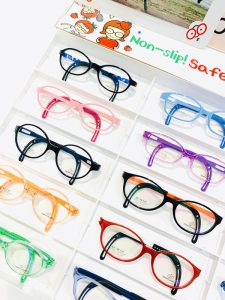
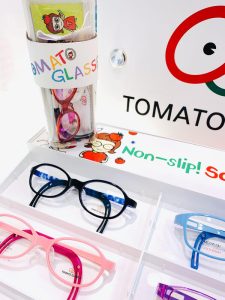
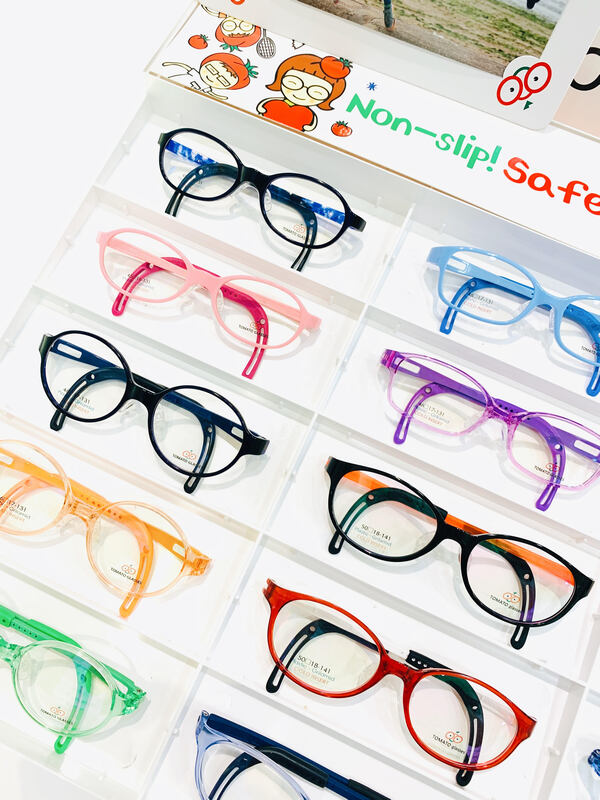
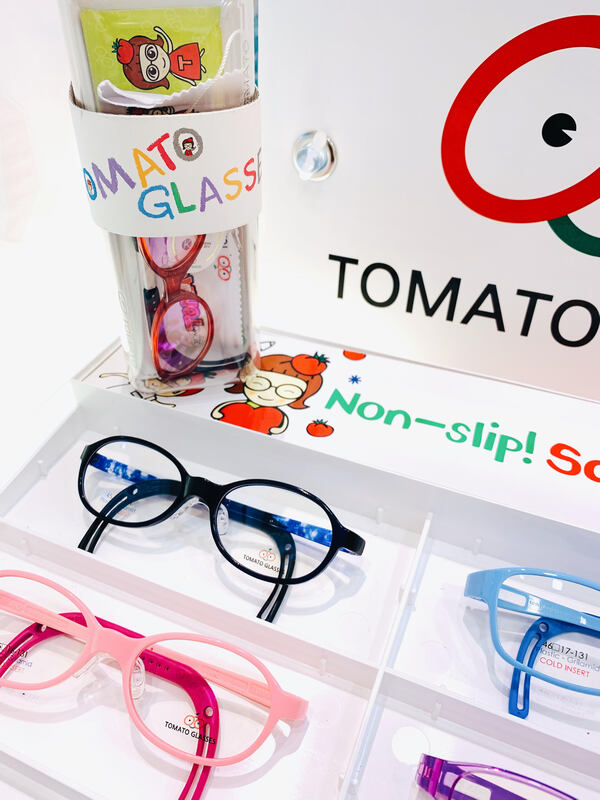
- Tomato Glasses: We are proud stockists of Tomato frames which are incredibly lightweight, flexible, and virtually unbreakable—perfect for little ones who are always on the move. They feature fully adjustable temples and a unique interchangeable nose pad system to ensure a secure, non-slip fit for every unique little face.
The importance of lens choices
The lenses are just as important as the frames. We offer several options specifically beneficial for children:
- Polycarbonate Lenses: These are the standard recommendation for children’s eyewear. Polycarbonate is significantly more impact-resistant than standard plastic lenses, providing crucial eye protection during sports and everyday play. They are also naturally scratch-resistant and block 100% of harmful UV rays.
- UV Protection: Children’s eyes are more transparent to UV light than adult eyes, making UV protection absolutely essential. All quality lenses should offer complete UV protection to safeguard their long-term eye health.
- Scratch-Resistant Coatings: While not unbreakable, a good scratch-resistant coating adds an extra layer of durability to keep lenses clearer for longer.
Myopia Control Lenses: managing short-sightedness
Short-sightedness (myopia) is becoming increasingly common in children, often starting between the ages of 6 and 13. It typically progresses as the child grows, and if left unmanaged, high myopia in adulthood can increase the risk of serious eye conditions such as retinal detachment and glaucoma.
We offer advanced myopia control lenses—specially designed glasses that not only correct your child’s vision but also help slow the progression of myopia. These lenses use innovative technology, such as embedded microlenses, to manage eye growth while looking just like ordinary glasses. Leading options include:
- MiYOSMART lenses: Using DIMS (Defocus Incorporated Multiple Segments) technology, these lenses have shown excellent results in slowing myopia progression in children. Long-term studies have demonstrated continued effectiveness over several years with no rebound effect.
- Stellest lenses: These lenses feature peripheral lenslets that create “myopic defocus” to slow axial elongation of the eye. Clinical studies have shown a 71% reduction in myopia progression compared to standard single-vision lenses.
Myopia management is an investment in your child’s long-term eye health, helping to reduce their risk of serious vision problems in later life. Our optometrists can advise you on whether myopia control lenses are suitable for your child.
Bring your child in for an eye examination—free on the NHS for under-16s—and let us help them see a brighter, clearer future. Our team is here to support you every step of the way. How to book your contact lens appointment?
You can book an appointment online or by giving us a call on 01752 415490 (Plymouth), 01752 404544 (Plymstock) or 01822 611119 (Tavistock).